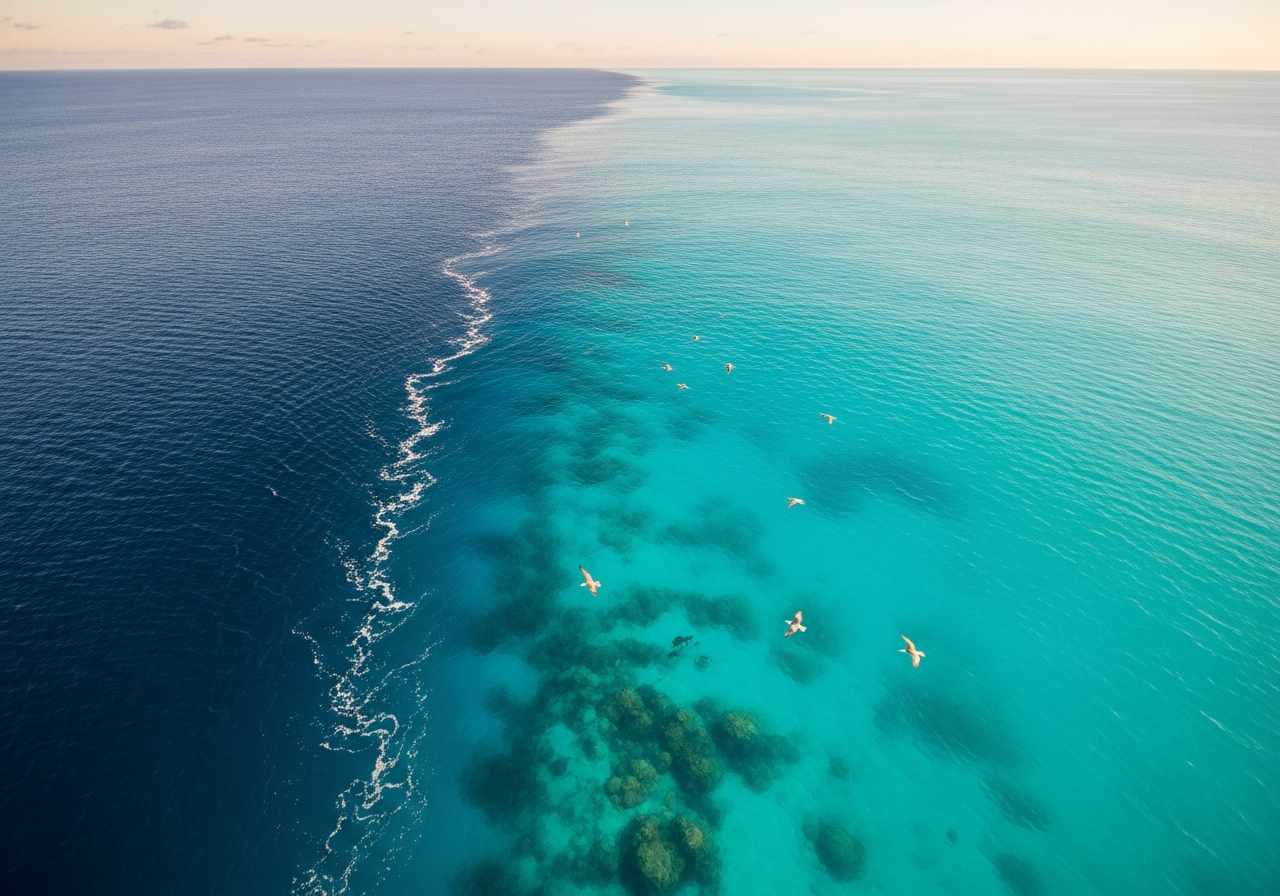
Have you ever gotten a feeling of fever? That rattling uneasy warmth, that there is something amiss? There is a fever in the Pacific Ocean at present. Its resurgence has been observed by scientists: a huge sea, called The Blob, that is heating up at an alarming rate. It is not merely a weather phenomenon. It is an overwhelming finding in our perception of climate crisis. And the consequences it implies are terror-stricken.
This is an entire ecosystem that is redefining itself in the form of this marine heatwave. The implication of this to our food on our plates and our planet? Let’s dive in.
There is a Bottomless Cliff in the Deep
The first release of the Blob was in 2013. Three years it was a torture. At this point, a large body of warm water is developing in the Gulf of Alaska. Satellite data confirms it.
This warming is not subtle. It is already 3-5degC higher than normal temperatures. That may sound small. However, to a fragile marine habitat, it is disastrous. Think of your body. A medical emergency is a sustained 104 deg C elevation. The sea is now in a critical condition.
- According to a scientist with NOAA, Dr. Dillon Amaya, the North Pacific has never been this warm in the recent years. We are observing the reorganization of the ecosystem as it happens.
The Domino Effect on Oceans Life
The desert is a nutrient-deficient place due to the warmth. It kills the tiny plants referred to as phytoplankton. The whole marine food web starts with this. When they fall, all the rest falls too.
To begin with, small species of animals known as zooplankton disappear. Then, the little fish which feed on them are starved. The bigger predators are found to be fighting soon.
- Take the case of the Alaska snow crab which is tragic. Billions of crabs just vanished after the final Blob. The population crashed. This resulted in two years of cancelled fishing season. This destroyed coastal communities and was a staggering finding to the biologists.
The crisis moves up the chain. Seabirds such as the common murre die starving on beaches. Calves of whales are spotted as skinny. The system is disintegrating, bit by bit.
Is Climate Crisis Brooding the Fire?
This is the central question. There has always been marine heatwaves. However the situation has changed radically. The minimum temperature of the ocean has increased. The tinder is in the form of human-imposed global warming.
One analyst likens it to a steroid-driven sportsman. The training is the natural cycle. The steroid is climatic change. It heightens the occurrence of the events, extremeness, and intensity. The ocean is being forced into a condition previously unimaginable to it.
- A recent study published in the scientific magazine has arrived at the following conclusion: The strength of this latest event cannot occur statistically without human intervention in the climate.
This new finding is right in our direction. We are not the mere spectators anymore. We are the participants of this drama.
A Fisherman Tale: Life on the Frontlines
Talk to a man whose life is at stake upon the sea. The anxiety is palpable. Mark is a Washington based salmon fisherman who tells about a frighteningly deserted ocean. And we are hauling up nets that are to fill. They’re not. The water feels different. It’s warmer on your hands. You just know.”
His narrative is an effective case study. It’s not just about economics. It is something to do with a lifestyle that is fading away. Coastal cities have an unpredictable future. The spillover is felt by everyone including the cost of seafood and the loss of culture.
What Can We Possibly Do?
So, where do we go from here? Scientists are getting better predictions. Their robots and satellites are placed underwater. Prediction will aid fisheries to conform better. It can give some kind of warning.
Adaptation is merely a sticking-plaster. The actual solution involves having to deal with the root cause. We need to switch off the thermostat in the world. This implies a fast abandonment of fossil fuels. It entails conservation of our blue carbon sinks such as mangroves and seagrasses.
This is a Pacific finding that is a wake-up call. Either we can hear it or we can listen. But the sea will not wait us to make up our minds.
Last Reflection: The Unblinking Eye of the Ocean
The Blob is not a mystery when coming back. It is a message. Our ocean has been taking our surplus heat over decades to bear the brunt of the climate crisis silently on our behalf. It is returning that heat back, now, in the form of a destroyer, a mass changing the ecosystem.
It is either we are being given a clear choice. This can be regarded as a transient aberration, a spike in the graph. Or, we can accept it at last as the new reality, as the reality that we have made. Our future and that great blue frontier is in our next step. Passive observation is at its end. That time of acting is now.